
Robotic mowers have become a popular choice for New Zealand homeowners who would rather spend the weekend at the beach than behind a mower. But if you have started shopping around, you will have noticed prices vary a lot from one robotic mower to the next.
That is because the price of a robotic mower in NZ depends far more on your property than on the machine alone. Lawn size, slopes, the number of separate areas, how the mower finds its boundaries, setup and ongoing servicing all play a part. This guide explains each of those factors so you can work out what you actually need, and avoid paying for capability you will never use.
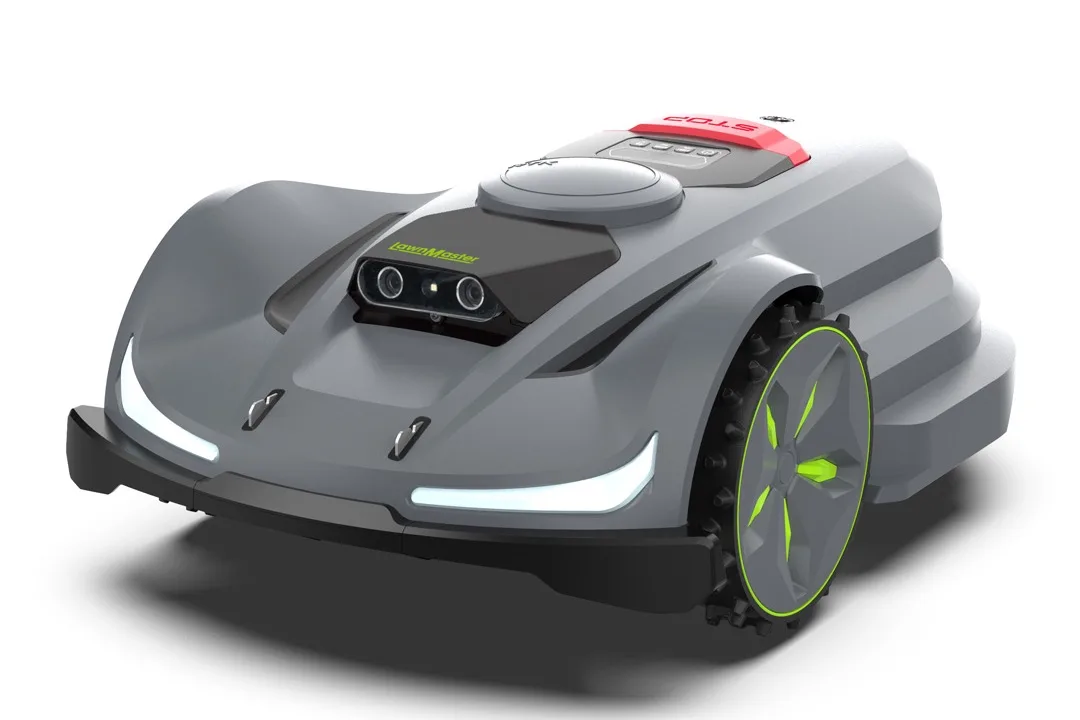
At STIHL SHOP Mt Maunganui, we sell the LawnMaster X5 and LawnMaster X7 robotic mowers from our showroom at 11 Newton Street, and we help customers from Mt Maunganui, Papamoa, Tauranga, Te Puke, Rotorua and across the Bay of Plenty choose the right setup for their lawn.
What drives robotic mower prices in NZ?
In short, five things shape what you will spend:
- Lawn size: bigger lawns need more mowing capacity, a wider cut and more battery.
- Slopes and complex zones: steep banks, narrow passages and several separate lawns call for a more capable machine.
- Boundary wire or wire-free: how the mower knows where to mow affects both the purchase price and the setup work.
- Installation and setup: placing the charging station, mapping the lawn and setting no-go areas takes time to get right.
- Servicing and support: blades, cleaning, software updates and local back-up keep a robotic mower working for years.
1. Lawn size and mowing capacity
Every robotic mower has a recommended maximum lawn area. The LawnMaster X5 is rated for lawns up to 2000m² with a 220mm cutting width, while the LawnMaster X7 is rated for lawns up to 3000m² with a wider 350mm cut.
A mower with a higher rating generally costs more, but buying one that is too small means it will struggle to keep up during the spring and early summer growth flush, when Bay of Plenty lawns can grow very quickly. As a rule, measure your mowable area (not the whole section) and choose a mower with some headroom above it. Council property maps or a satellite view on your phone are a quick way to estimate it.
2. Slopes, complex zones and obstacles
A flat, open rectangle of grass is the easiest and cheapest lawn for a robotic mower. Things get more demanding when your property has:
- Steep banks or hillside sections, common around parts of Tauranga, Welcome Bay and the Rotorua lakes.
- Several separate lawns, such as a front lawn and back lawn joined by a narrow side path.
- Garden beds, trees, play equipment, pools and other obstacles to work around.
- Soft or uneven ground that needs good traction.
Both LawnMaster models have all-wheel drive for traction on sloping lawns. The X5 handles slopes of up to 30°, and the X7 handles up to 35°. Both let you map multiple mowing zones and no-go areas in the app, and both have dual cameras to help detect obstacles. The X7 also lets you adjust the cutting height (20 to 100mm) through the app, while the X5's cutting height (20 to 60mm) is adjusted by hand.
3. Boundary wire vs wire-free setup
Traditionally, robotic mowers use a boundary wire. A low-voltage wire is pegged or buried around the edge of the lawn and around anything the mower should avoid, and the mower turns when it detects the wire. Boundary wire mowers can cost less to buy, but the wire takes time to lay, and it needs repairing if it is cut by edging, aerating or digging. Any change to your garden layout means moving the wire.
Wire-free mowers like the LawnMaster X5 and X7 use RTK satellite positioning and vision navigation instead. RTK uses a reference station on your property to give the mower precise positioning, and the cameras help it see what is around it. You map the boundary and no-go zones in the app rather than in the ground, and changing a zone later takes a few minutes on your phone.
Wire-free models usually cost more up front, but they save on installation time and future wire repairs. They do need a reasonable view of the sky, so a very heavily treed or built-in section is worth talking through with us before you buy. If you would like to compare options, you can also browse the STIHL robotic mower range on the STIHL SHOP online store.
4. Installation and setup
A robotic mower is only as good as its setup. Getting it right involves choosing a level spot for the charging station with power nearby, positioning the RTK reference station where it has a clear view of the sky, mapping the lawn edges and zones in the app, setting no-go areas around garden beds and pools, and creating a mowing schedule that suits the season.
Some owners are happy to do this themselves, while others prefer a hand getting started. When you are comparing prices, check what setup support is included, and factor in your own time if it is not. Our team can talk you through what is involved for your property before you buy, so you know what to expect.
5. Ongoing servicing, parts and local support
A robotic mower works hard, often mowing several times a week through the growing season, so ongoing care is part of the real cost of ownership. Typical running costs include:
- Replacement blades, which are small and wear with use.
- Regular cleaning of the deck, wheels and sensors, especially in sandy coastal soils around the Mount and Papamoa.
- Software updates through the app.
- A periodic check of the drive system, battery and charging contacts, ideally before spring.
- Winter care, including cleaning and storing the mower if you take a break from mowing.
This is where buying locally pays off. If something is not right, you can bring the mower back to our Mt Maunganui workshop rather than sending it away. You can book a service online or contact the team for advice at any time.
LawnMaster X5 vs X7: which suits your lawn?
Both models are wire-free, use RTK and vision navigation, have all-wheel drive and dual cameras, and connect by Wi-Fi and Bluetooth to the app. Both also have rain, tilt and lift sensors and PIN-code protection. The main differences are:
- LawnMaster X5: lawns up to 2000m², 220mm cutting width, slopes up to 30°, cutting height 20 to 60mm adjusted by hand. A strong fit for typical suburban sections in Mt Maunganui, Papamoa and Tauranga.
- LawnMaster X7: lawns up to 3000m², 350mm cutting width, slopes up to 35°, cutting height 20 to 100mm adjusted in the app. Better suited to bigger lawns, steeper ground and larger properties out towards Te Puke and Rotorua.
Current prices for both models are shown on their product pages and are kept up to date by the store. If you are not sure which one you need, the right answer usually comes down to your mowable area and your steepest slope.
Is a robotic mower worth it?
When you compare a robotic mower with a traditional mower, look beyond the purchase price. A robotic mower has no fuel to buy, needs no weekend time from you and, because it cuts little and often, can leave a denser, tidier lawn. On the other side of the ledger, you will still need to trim the edges, and steep or awkward areas may need a little help. For many busy households and holiday homes, the time saved is what makes it worthwhile.
Get advice or a quote from our Mt Maunganui showroom
The easiest way to get an accurate idea of cost is to talk to us about your lawn. Come and see the LawnMaster robotic mowers at 11 Newton Street, Mount Maunganui. We are open seven days a week. To help us give you useful advice, bring along:
- An approximate lawn size, or a screenshot of your property from a map app.
- Photos of any slopes, narrow passages and separate lawn areas.
- Where you could put the charging station, and whether there is power nearby.
Prefer to talk first? Call 07 575 8840, or send us a message and the team will get back to you to book a chat or a quote.
