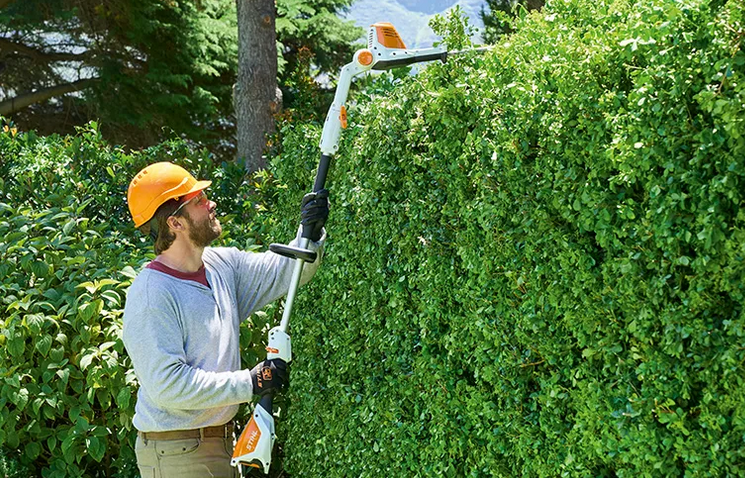
Trimming hedges is one of the simplest ways to smarten your garden and lift kerb appeal. With the right tool, sound technique and a few safety habits, you’ll get clean results and keep plants healthy season after season. This guide covers tool choice, safe operation, trimming technique, timing and after-care—whether you’re a first-timer or a seasoned gardener.
• Shape & neatness: Defined lines frame paths, driveways and borders.
• Safety & access: Prevent hedges encroaching on walkways, gates and sight-lines.
• Health & density: Little-and-often trimming encourages bushy growth for privacy and wind protection, and helps prevent leggy gaps.
• More flowers next year: For flowering species, trimming after bloom often improves the following season’s display.
• Pest & disease control: Removing dead or diseased wood improves airflow and light, reducing mildew and pest pressure.
Think about hedge height, branch thickness, how often you trim, and access to power.
Battery (Cordless) — the all-round choice
• Instant start, low noise, low weight; no fuel to mix or store.
• Modern STIHL battery models deliver excellent run time and cutting performance for most home and lifestyle blocks.
• Ideal when charging isn’t practical or you’re tackling large, mature hedges far from power.
• Heavier and noisier, but built for continuous use and thicker material.
Not sure which suits your garden? Drop in for advice—bring photos and rough hedge dimensions and we’ll match a model (including long-reach/pole options) to your job.
• PPE: Gloves, safety glasses, sturdy boots; long sleeves recommended. Add ear protection for petrol models.
• Pre-use check: Sharp blades, tight fasteners, undamaged guards and (if corded) good cabling. Replace damaged parts before use.
• Body position: Two-handed grip, feet apart, keep hips behind the tool, and work below shoulder height. Use a long-reach trimmer rather than a ladder for tall hedges.
• Work area: Clear obstructions, pets and people. Be mindful near fences/walls to avoid kickback or blade damage.
• Weather & visibility: Avoid wet, slippery footing and poor light.
1) Sides first
Start at the bottom and work upwards using smooth, sweeping strokes while you walk along the hedge. This keeps your rhythm consistent and avoids scallops. Where sightlines are tight, use short, angled motions to prevent cutting into the main stems.
2) Then the top
Aim for a level crown so sunlight reaches the lower foliage. A string line or straight batten makes an excellent guide on long runs. Slightly tilt the blade (≈10°) towards the cut to leave a crisp edge and shed clippings.
3) Tall or deep hedges
Swap the ladder for a long-reach/pole trimmer with an adjustable head; it’s safer and faster. Take a step back every few minutes to check symmetry and height—small corrections now beat big fixes later.
• Fast-growing evergreens (e.g., pittosporum): little-and-often during spring/summer, light tidy in early autumn.
• Flowering hedges: trim right after flowering to protect next season’s buds.
• Bird nesting: follow local guidance—avoid cutting when nests are active.
1. Clean the blades to remove sap and debris (a resin solvent such as STIHL SuperClean works well).
2. Run briefly after spraying to distribute the cleaner, then wipe off excess and fit the blade cover.
3. Check fasteners and guards; vibration can loosen screws—snug them up without pinching the blades.
4. Sharpen or replace dull or chipped blades; blunt blades tear foliage, stress motors and leave a ragged finish.
5. Powertrain care:
- Battery: remove, wipe contacts, store cool and dry.
- Petrol: for long storage, empty or stabilise fuel; follow your manual for filters and plugs.
6. Storage: dry, secure location; hang or case the tool to protect the bar and teeth.
• Taper the hedge slightly wider at the base than the top—better light equals greener foliage all the way down.
• Let the tool cut—don’t force it. If you’re pushing, the blades need sharpening or you need a model with a longer bar.
• Mind the cable (if using electric): keep it over your shoulder and behind you at all times.
• Sweep and inspect afterwards; removing clippings from the hedge reduces fungal issues.
We stock a massive range of outdoor power gear from STIHL, plus Masport, Walker, Silky, MTD, Cub Cadet, Honda, Rover and Hansa. Bring your hedge photos and measurements—our team will size the right STIHL hedge trimmer, suggest the best bar length, and set you up with PPE, blade care products and long-reach options so you can trim safely, neatly and confidently.
Need a service or sharpening? Our in-house workshop keeps your tools running like new.